


Stories

Preface: Trapped in the “Glue Logic”
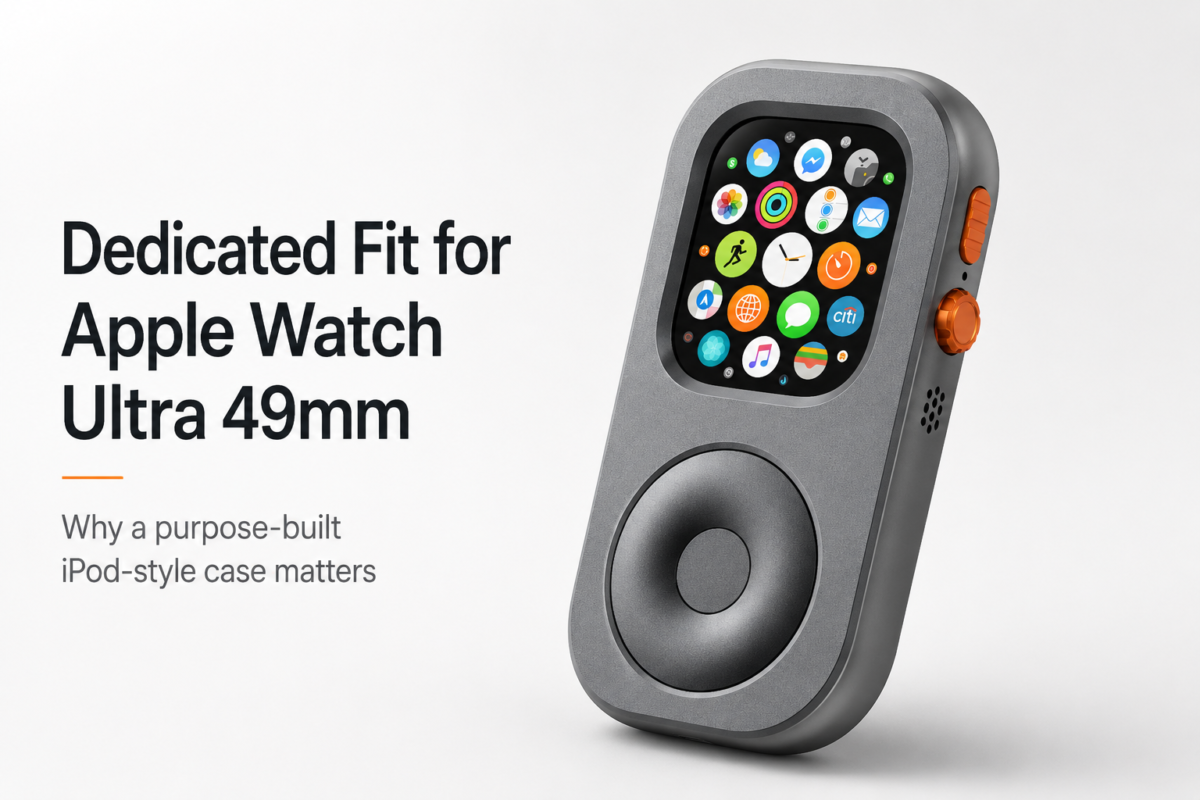
In my previous article, I discussed the “life and death line” of PCR touch technology at a physical level. But theory is one thing; reality hits differently when you’re trying to cram that technology into a 18mm thick aluminum chassis. You quickly realize that your greatest enemy isn’t the circuitry—it’s the installation logic.
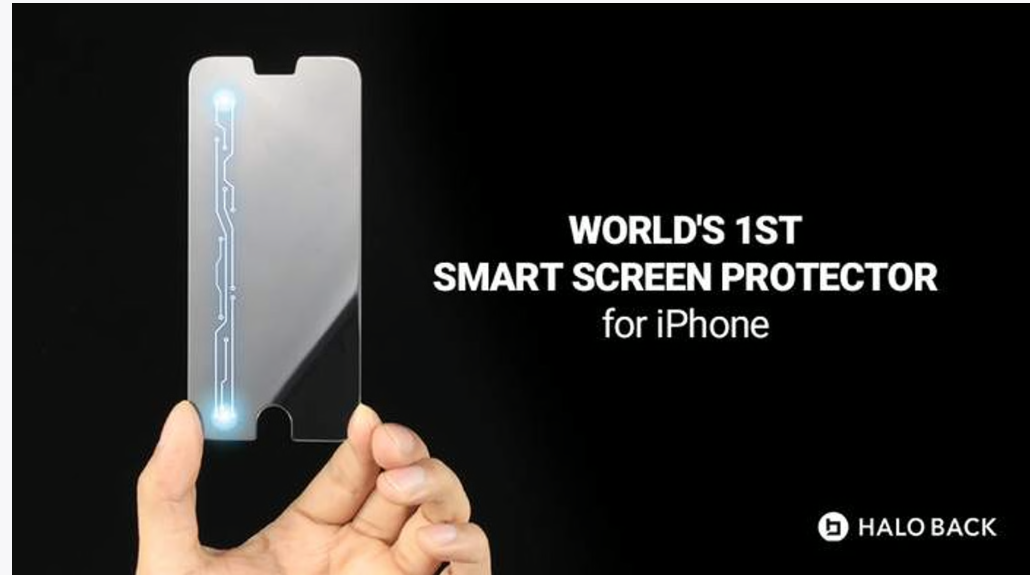
During one phase of development, the founder and I were locked in a long-standing debate: Should we provide the user with a capacitive “film” with integrated circuitry that they have to stick onto the watch themselves?
In a laboratory setting, the film looks perfect. You apply it meticulously to the Apple Watch screen like a high-end screen protector, squeeze out the bubbles, and align the edges. The touch works. Everyone high-fives. But as a PM, staring at that paper-thin FPC (Flexible Printed Circuit) membrane with its delicate golden traces, I had only one thought: This is a suicide mission for mass production and after-sales support.
Part I: Rejecting the “Street Vendor” User Experience
I recorded a video for the founder. In the video, I attempted to swap the shell of a Series 4 watch using the adhesive film method.
If you want the touch to be sensitive, the film must be adhesive. Once it’s sticky, it becomes a “disposable consumer good.” What if the user aligns it incorrectly? What if air bubbles form? Most critically, that FPC cable is fixed to the front cover of the repod pro. If you stick the film to the watch, the cable becomes an “umbilical cord” connecting the shell and the device.
This means every time a user removes the watch to clean it (or just wants to change a strap), they have to undergo a precision operation akin to defusing a bomb. One slip of the hand, one snapped cable, and the entire repod pro is bricked.
I told the founder: “We cannot turn our users into professional screen-protector installers. More importantly, we can’t let them feel like they bought a fragile plastic puzzle instead of a ‘Pro’ device.”
The Product Manager must step in here: Kill the adhesive solution. Return to mechanical compression.
Part II: 5.6mm—A Victory for Probability, Not Just Width
When we decided to abandon glue and rely on mechanical pressure to force the FPC against the screen, a new problem arose: Tolerance disappeared.
Without adhesive to bridge the molecular distance, air gaps become inevitable. If the watch wobbles by even 0.1mm inside the case, or if the user’s installation is slightly off-center, the signal dies. At the engineering review, I hammered the table: “Since we can’t guarantee 100% alignment, we’re going to make the ‘target’ five times larger!”
This is the origin of the 5.6mm extreme width logic.
I tasked the engineers with calculating the absolute physical limits of the internal front-shell space. After accounting for brackets and screw positions, the maximum width left for the “Back” button traces was exactly 5.6mm.
The significance of this 5.6mm is that it transforms a fragile “point-to-point” connection into a redundant “zone-coverage” system.
- If the watch shifts 1mm to the left, the 5.6mm contact still covers it.
- If the user’s pressing force is uneven, the 5.6mm surface area generates more stable charge coupling.
In hardware design, redundancy is not waste; redundancy is the highest form of respect for a user’s potential mistakes.
Part III: Inward Extension—Avoiding the “Curvature Curse”
Widening the traces wasn’t enough. The 2.5D curved glass of the Apple Watch is like the “Bermuda Triangle” for capacitive signals.
That’s where the glass slope is steepest, the air gap is largest, and the FPC membrane’s rebound force is strongest. If you try to force a touch connection exactly at the edge, you are fighting the laws of physics—and you will lose.
I came up with a strategy: Since the edges won’t stick, we “reach” inward.
We extended the contact zone for the “Confirm” button away from the steep edge and deep into the center—halfway toward the middle of the screen.
This change made the structural engineers want to strangle me. Extending inward means the FPC becomes massive, blocking more light and doubling the requirements for the transparency of the base material. But I stood my ground: “The founder wants a ‘Confirm’ button that works every time, not a pretty decoration that fails when pressed.”
By reaching inward, we abandoned trying to set up camp on a cliffside and moved the base to the flat plains. On the flat center of the glass, only minimal pressure is needed to achieve perfect electromagnetic coupling.
Part IV: The Sandwich Architecture—Making the Case Your “Hand”
If we aren’t using glue, how do we guarantee pressure?
We designed a “Sandwich” Mechanical Compression Architecture.
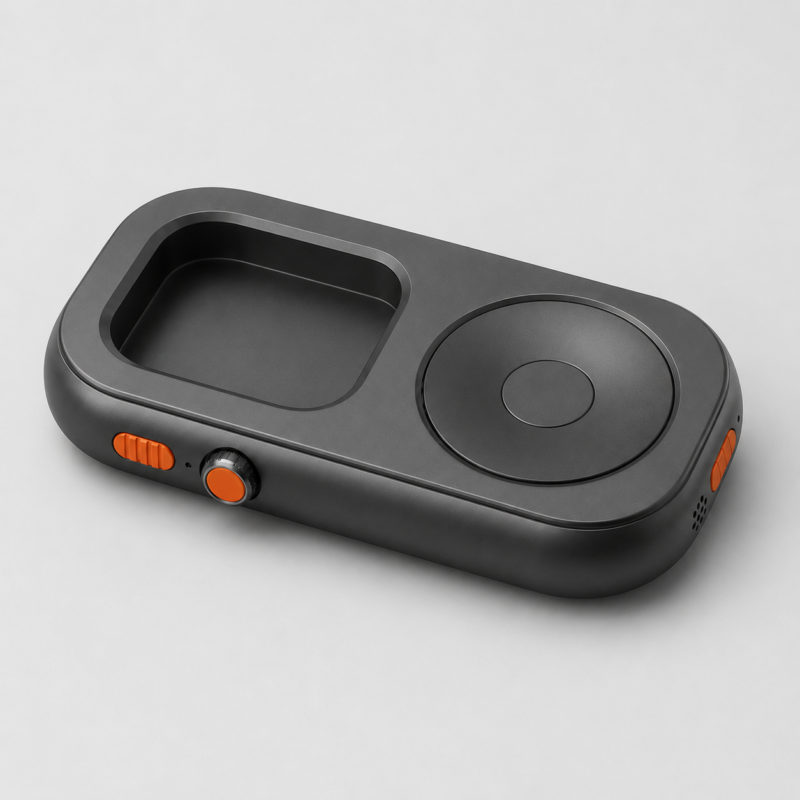
- The Front Cover (The Anchor): The FPC circuit is vacuum-heat-pressed onto the inside of the aluminum front shell. It is a solid, immovable base.
- The Back Cover (The Piston): We redesigned the battery compartment support, adding a layer of high-rebound precision foam.
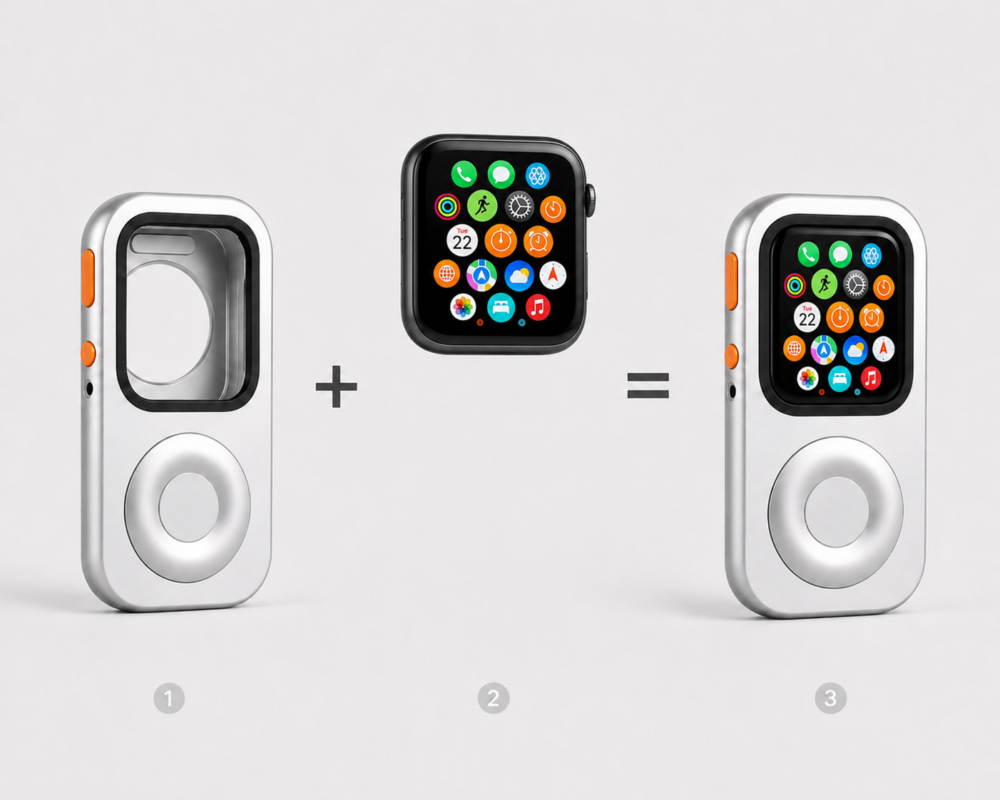
- The Installation Process: The moment the user places the watch into the repod pro and snaps the back cover shut, the back cover acts like a piston, forcing the watch screen directly against the FPC circuitry on the front cover.
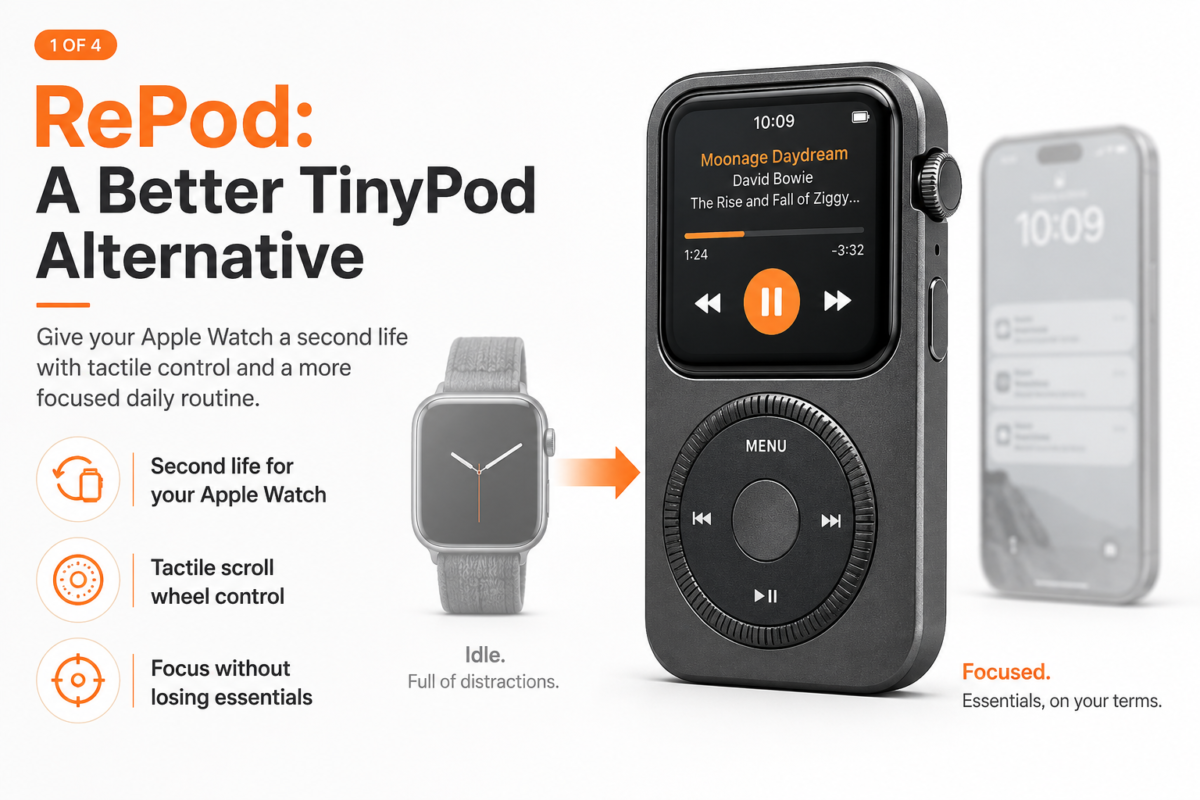
This solution solves the “plug-and-play” problem elegantly. No glue, no umbilical cord. You put it in, it’s a music player; you take it out, it’s your Apple Watch again.
Part V: PM’s Anxiety—Precision as a Double-Edged Sword
While 5.6mm gives us confidence, the high precision required by “inward extension” still keeps me up at night.
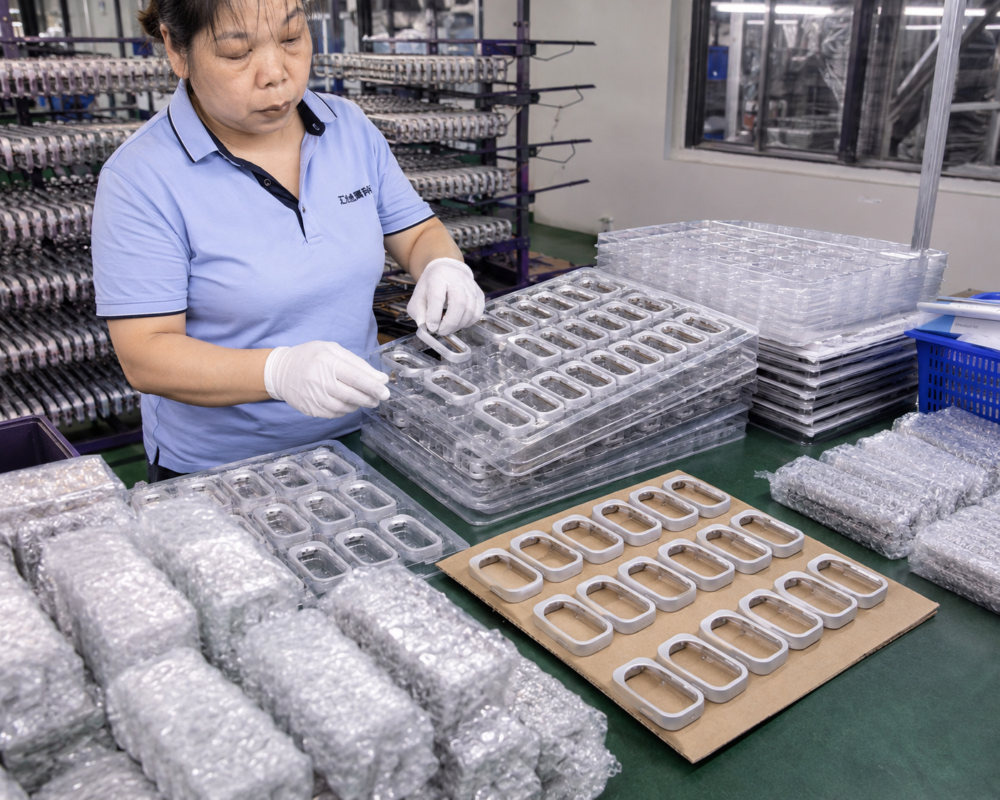
Such a large FPC coverage area places absurd demands on the manufacturing process. If a single speck of dust falls in during heat-pressing, or if the silver paste thickness is uneven, visual artifacts will appear on the screen.
I have to walk a tightrope between “touch success rate” and “visual perfection.” I wrote a line in bold at the top of the factory instruction manual: “We are building a piece of art, not a remote control.”
Conclusion: See You at the Factory
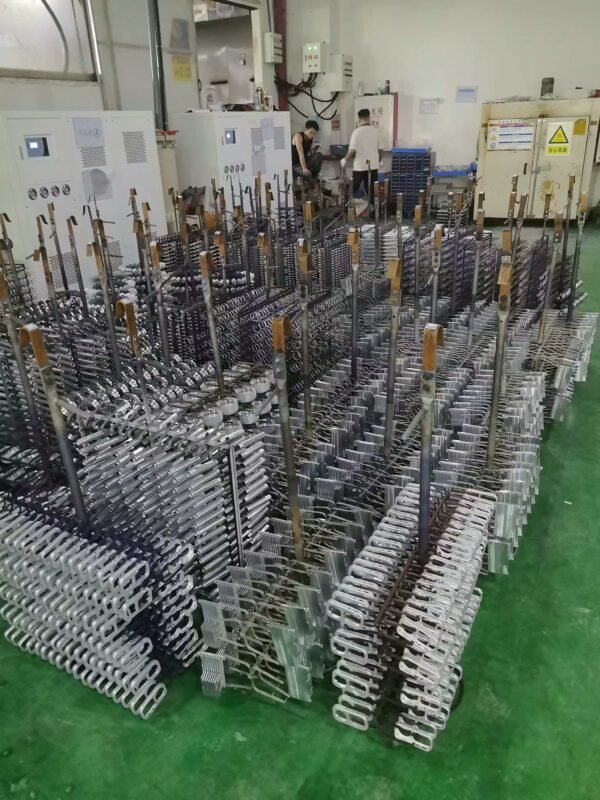
Tomorrow, the version of the prototype featuring “5.6mm extreme redundancy + deep extension” will be sent for fabrication.
This week of waiting will determine whether the repod pro becomes a landmark product or remains a “great idea that couldn’t be manufactured.” Sitting in my office, looking at the structural stack-up on my screen, I know one thing for certain: this is the most rational architecture possible under current physical constraints.
There are no miracles in hardware development—only the patience to oscillate repeatedly within a 0.1mm tolerance.